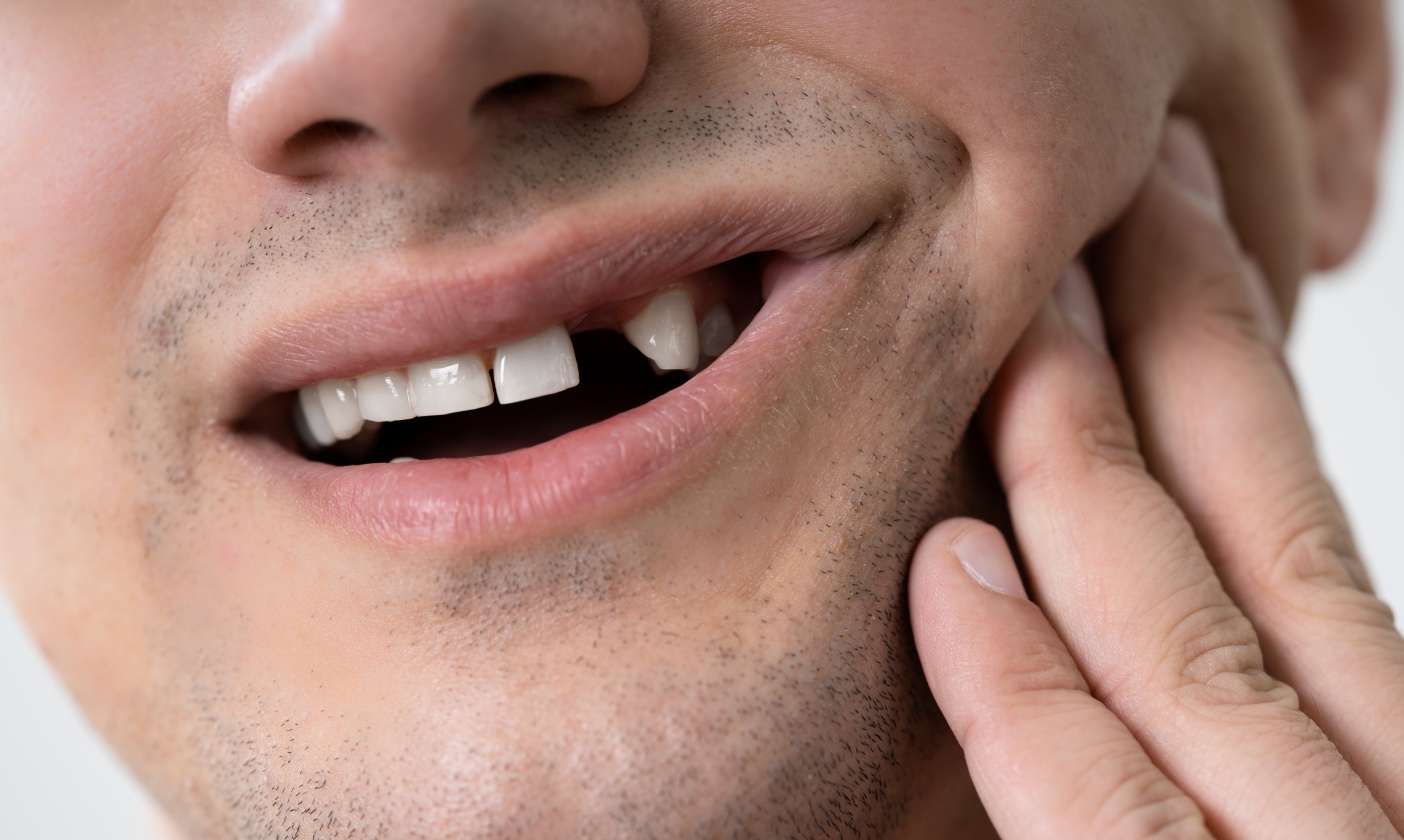
Once the initial discomfort settles, it can start to feel manageable, particularly if the gap is towards the back of the mouth or not immediately visible when smiling.
Because of that, it’s common for patients to delay treatment for months or even years.
But while a missing tooth may not always cause immediate pain, leaving it untreated can gradually affect far more than appearance alone.
Teeth work together as a system. Each tooth helps support biting forces, maintain spacing and keep the surrounding structures stable.
When a tooth is lost, the balance in the mouth begins to change.
Over time, neighbouring teeth can start to drift into the space, while the opposing tooth may begin to move because it no longer has anything to bite against. This can gradually affect:
For some patients, these changes happen slowly enough that they are barely noticed at first.
One of the biggest long-term effects of losing a tooth happens beneath the surface.
The roots of natural teeth help stimulate the jawbone when you chew. Once a tooth is removed or lost, that stimulation reduces significantly.
Over time, the bone in that area can begin to shrink or weaken — a process known as bone resorption.
This matters because bone helps support:
The longer a tooth is missing, the more difficult replacement treatment can sometimes become.
Many patients unconsciously change the way they chew after losing a tooth.
At first, this might simply mean favouring one side of the mouth. Over time, though, that uneven pressure can place additional strain on other teeth and restorations. Patients sometimes describe:
These changes often happen gradually rather than suddenly, which is why they are easy to ignore initially.
For some people, a missing tooth becomes something they rarely think about.
For others, it can quietly affect confidence in social situations, photographs or conversations. Patients may smile differently, cover their mouth when laughing or avoid close-up interactions without fully realising it.
This is particularly common when missing teeth are visible while speaking or smiling.
Replacing a missing tooth is not always purely cosmetic — for many patients it is also about feeling more comfortable and confident again.
One of the reasons dentists encourage patients not to delay treatment too long is because replacement tends to become more straightforward when surrounding teeth and bone are still stable.
If a missing tooth is left untreated for many years, additional issues can sometimes develop first, including:
Addressing these changes can make future treatment more complex than it would have been initially.
The right solution depends on the position of the tooth, the condition of the surrounding teeth and the patient’s long-term goals. Options may include:
At Optima Dental Care, replacement options are carefully assessed based on both function and long-term stability rather than simply filling the space as quickly as possible.
For patients considering implants, Dr Mohan Chawla uses Straumann implant systems — recognised internationally for Swiss precision, long-term research and reliability. Implant treatment is provided by Dr Chawla himself, who also contributes to teaching through the Oxford Deanery.
Not always. Some patients may safely monitor certain gaps for a period of time depending on the tooth involved and the overall stability of the mouth.
However, it is important to understand the possible long-term effects before deciding to leave a space untreated indefinitely. A consultation allows you to assess:
Not every missing tooth needs immediate treatment, but understanding the long-term picture early often gives patients more flexibility and simpler options.
Whether the concern is function, appearance or preserving long-term oral health, seeking advice sooner rather than later can help prevent smaller problems from becoming more complex over time.
BACK TO BLOG



Experience exceptional dental care tailored to you—reserve your visit now and take the first step toward a healthier, more confident smile.
BOOK APPOINTMENT